2026-11-22 ·
How Charlotte Humidity Affects Exterior Paint Adhesion
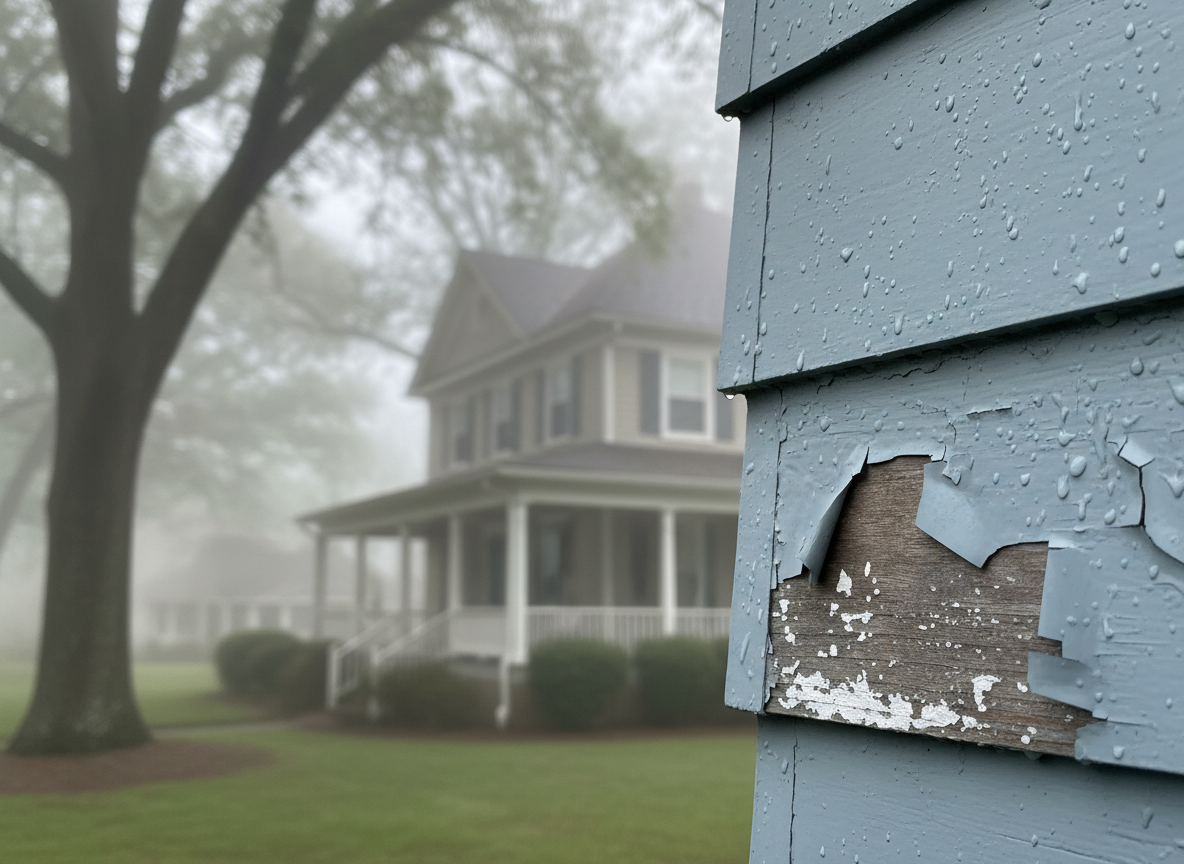
Charlotte humidity reduces exterior paint adhesion because high moisture levels during application and curing prevent proper film formation, especially on brick and fiber-cement siding common in neighborhoods such as Dilworth and Myers Park. South-facing walls in Uptown Charlotte and South End often show peeling within five to seven years when paint is applied during peak summer humidity above 70 percent.
How Humidity Disrupts the Paint Film
Hot humid summers in Mecklenburg County keep relative humidity elevated even after rain stops, so water vapor lingers on surfaces longer than in drier climates. This moisture interferes with the binder in latex paints, leaving microscopic voids that let more water enter later. Fiber-cement boards on newer homes near Ballantyne expand slightly with absorbed humidity, cracking the paint film at joints. Brick homes in Elizabeth and Plaza Midwood hold surface dampness overnight, delaying cure and allowing mildew to anchor under the coating. An independent local painter watches dew-point forecasts and avoids painting when surface temperature sits within five degrees of the dew point to prevent these failures.
Surface Preparation Steps for Humid Weather
Pressure washing removes mildew and chalking but must finish early enough for the surface to dry fully before coating. In Charlotte's climate this often means washing one day and priming the next only after a dry, breezy period. Scraping loose paint on decks and docks around Lake Norman subdivisions requires extra care because humidity softens old layers. Sanding glossy trim restores tooth so new paint grabs the substrate rather than sliding over it. Caulking gaps around windows in NoDa prevents water from wicking behind the film. These steps, performed by an independent local painter, directly address the moisture issues that shorten adhesion life on local homes.
Paint and Sheen Choices That Resist Moisture
Acrylic latex paints formulated for the Southeast perform better than vinyl-acrylic blends when humidity stays high. Flat sheens on siding hide imperfections but collect more mildew; satin or eggshell on trim sheds water better while still allowing vapor to escape. Primer choice matters on previously painted brick in Freedom Park homes; a high-quality acrylic primer seals porous masonry so topcoats bond uniformly. Homeowners in Stallings and Mint Hill often request mildew-resistant additives because spring pollen and summer humidity combine to feed growth on shaded elevations. An independent local painter matches these products to the specific exposure of each elevation rather than using one formula everywhere.
Ongoing Maintenance and Early Warning Signs
Inspecting south and west walls each spring reveals softening or blistering before widespread peeling occurs. Washing mildew with a mild detergent solution before it penetrates the film extends the interval between full repaint cycles. Checking caulk around doors and windows near Spectrum Center and Bank of America Stadium prevents water entry that lifts paint from underneath. When chalking appears on fiber-cement in Ballantyne subdivisions, an independent local painter can advise whether a maintenance coat will restore protection or whether full removal is required. These checks tie directly to the adhesion problems created by repeated humidity cycles.
Homeowners ready to address exterior paint issues on their Charlotte property can call (833) 716-1091 to connect with an independent local painter familiar with Mecklenburg County conditions.